
EA College Football Mobile 27
ELECTRONIC ARTSSports
4.4646.00 Reviews
- Version
- 3.0.0
- Installs
- 100.00K
- Age Rating
- Everyone
Screenshots
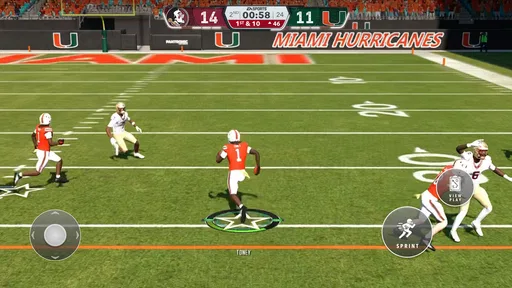

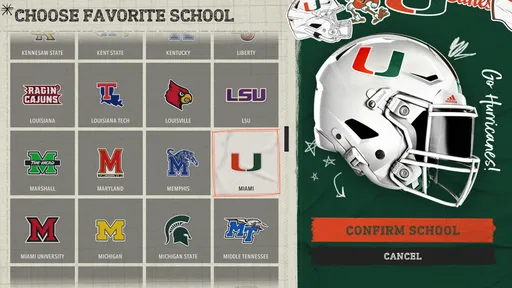
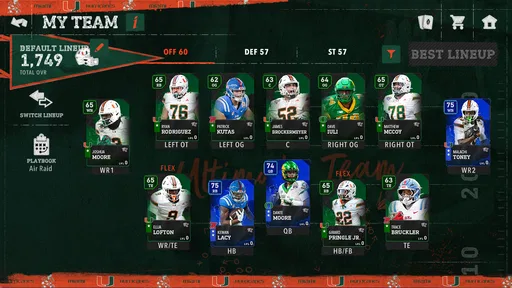
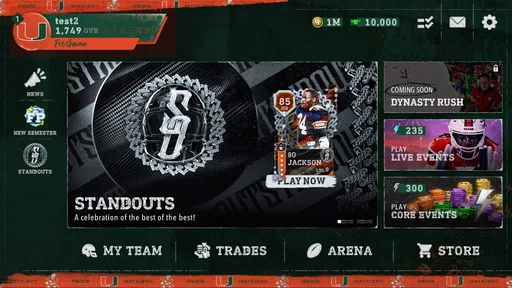

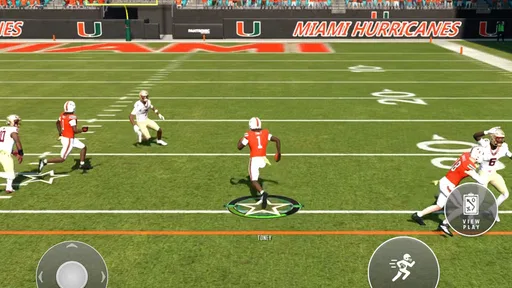

Our Review of EA College Football Mobile 27
 Analysis by Appyee
I went into EA College Football Mobile 27 expecting a quick sports game built around the fantasy of running a college football program, and that is exactly where its appeal starts. You are not simply stepping onto the field for isolated matches; the central idea is becoming the manager and coach of a dream team, then trying to overcome rival teams in a playoff-focused format. That gives each decision more weight than a basic arcade match, even when I only have a short session available.
As a free sports game from ELECTRONIC ARTS, it is easy to try without committing money up front. The audience is broad too: the age rating is Everyone, and the game has reached over ten thousand installs. Its current version is 1.2.0, while the average rating sits at 4.1 from around eight hundred ratings. Those numbers suggest a generally positive first impression, but not a universally loved experience, which matches my own view: the concept is attractive, although the long-term value depends heavily on how much you enjoy managing a team rather than simply playing football.
How the first goals shape the opening hours
The strongest part of the opening is the clarity of the fantasy. I immediately understand what I am supposed to care about: assemble a team, make coaching decisions, and push through playoff competition. That is more motivating than a sports title that throws me into matches without a larger reason to continue. Early goals work best here when I treat each game as a step toward proving that my chosen squad can handle stronger rivals.
For a new player, I would avoid trying to optimize everything at once. The useful early habit is to identify what the game is asking me to improve before spending resources or making changes. In a manager-and-coach game, the temptation is to chase every attractive upgrade immediately, but that can make the opening feel scattered. I get more satisfaction by choosing a simple priority, such as building a reliable lineup or learning how the playoff path is structured, and then judging each result against that aim.
This is also where the game separates itself from a traditional football game. If I want direct control over every moment, the manager framing may feel indirect. If I enjoy making choices before and between contests, the same structure gives ordinary matches a useful context. The early experience is therefore less about spectacular individual plays and more about understanding how my decisions affect the team I am trying to lead.
One practical use case is a short evening session. I can open the game with a modest goal—prepare for the next rival, review the team situation, or complete the next stage of my playoff run—rather than needing a long uninterrupted block of time. That makes the format more approachable than a full console-style football session, especially when I want a sports game that still offers a sense of direction.
What makes progress feel visible
Progress in this kind of game needs to be easy to read. The most satisfying signal is not merely winning one contest; it is feeling that the team is moving from an uncertain opening toward a credible playoff contender. Each successful step gives me a reason to care about the next rival, while setbacks show me that the current approach needs adjustment instead of making the whole run feel meaningless.
I found it helpful to separate visible progress from permanent improvement. Advancing through a competition is an immediate reward, while strengthening a dream team is a longer-term project. Keeping those two ideas distinct prevents disappointment after a loss. A defeat can interrupt the current momentum without erasing the broader purpose of building a better squad and becoming a more effective coach.
There is a useful psychological loop here: the game gives me a target, lets me test my choices, and then presents another reason to refine the team. That loop is more engaging than a sequence of disconnected matches. It also explains why the title can appeal to people who do not usually spend much time with sports games. I do not need to be interested in every detail of real-world college football to understand the basic pleasure of taking an imperfect team and trying to make it competitive.
My advice is to pay attention to the moments just before a match rather than rushing straight to the result. Those moments are where the manager fantasy earns its place. I can think about whether I am responding to the rival in front of me or simply following the same plan every time. That small change in mindset makes the game feel more strategic and gives losses more instructional value.
Where the challenge begins to rise
The challenge is most interesting when a comfortable early approach stops working. A game about defeating rivals cannot remain satisfying if every opponent is handled in exactly the same way. I prefer the point where a win requires me to reconsider my team and coaching choices instead of repeating the opening routine. That is where the playoff setting gains tension: progress is not just a march forward, but a test of whether my decisions can survive a stronger opponent.
At the same time, the difficulty needs to feel understandable. When I lose, I want to know whether the problem came from poor preparation, an underdeveloped team, or a bad response to the rival. If the reason is clear, the next attempt feels worthwhile. If the result seems disconnected from my decisions, frustration arrives quickly. This is an important distinction for anyone choosing between this game and a more direct action-focused football title.
I would describe the learning curve as better suited to patient players than to people looking for instant mastery. The manager role asks me to observe patterns and make deliberate adjustments. That may feel slower than taking control of a star player and trying to win through reflexes. In return, the victories feel more connected to planning. The game works best when I accept that improvement comes from reading the situation, not just playing faster.
A useful approach is to treat each rival as a separate problem. Rather than assuming that the lineup or strategy that worked previously will remain ideal, I consider what the next contest demands. This does not require complicated theory; it simply means resisting autopilot. That habit is one of the clearest ways to make the playoff journey feel like a coaching challenge rather than a repetitive checklist.
Does the pacing keep me playing?
The pacing has a natural push-and-pull. Winning creates forward motion, while the manager layer gives me a reason to pause and think before the next challenge. That balance is valuable on mobile because it supports both quick check-ins and more focused sessions. I can play for a few minutes when I am busy, or spend longer considering how to guide the team through a difficult stretch.
Where the pacing may lose some players is in the space between excitement and repetition. The basic promise—build a team and beat rivals in playoff competition—is clear, but the long-term experience depends on whether the progression continues to make decisions feel meaningful. Players who need constant novelty may find the manager loop less compelling than a game with a wider range of modes or more direct on-field control.
The free entry point helps here because I can test that pacing without paying first. However, the game includes in-app purchases ranging from $0.99 to $99.99 per item. That creates an important trade-off. Spending may make progression feel more convenient, but I would recommend playing long enough to decide whether the underlying coaching loop is enjoyable before buying anything. A purchase cannot fix a game that does not match my preferred style of play.
This is also where retention pressure can become noticeable in any free sports game. The desire to improve a dream team and defeat the next rival naturally encourages another session, but that motivation should come from the challenge rather than from feeling forced to spend. I prefer using the game’s goals as personal milestones: reach the next meaningful stage, learn from a loss, or make the squad more competitive. That keeps the experience grounded in play instead of turning every pause into a reason to purchase.
For parents or younger players, the Everyone rating makes the game broadly approachable, but I would still keep an eye on the purchase options if the device is shared. The age rating describes the intended audience, while the presence of paid items affects how I would manage access. That is not a reason to avoid the game, but it is a practical part of deciding whether it fits a family device.
Who will enjoy it most
I would recommend this game to someone who likes the idea of being responsible for a team rather than controlling a single athlete. It is especially suitable for players who enjoy setting a direction, watching the results, and adjusting after a rival exposes a weakness. The playoff framing gives those choices a clear purpose, so the experience does not feel like an abstract management spreadsheet.
It is also a good fit for a football fan who wants something lighter than a full simulation. The manager-and-coach perspective offers a different kind of involvement, with less emphasis on mastering every on-field movement and more emphasis on building a competitive identity. I can play it when I want sports flavor and decision-making without settling in for a long, demanding match.
I would be more cautious about recommending it to someone who primarily wants realistic, hands-on football action. If the main pleasure comes from personally executing every play, this game’s central structure may feel like a compromise. A conventional football game with direct controls would be a better choice in that situation. Likewise, players who dislike free-to-play purchase prompts should approach carefully, even though the game itself is free to download and try.
Three habits that make the experience better
First, I would set a purpose for each session. “Play until I win” can turn into frustration, especially after a difficult rival. A better target is to understand one problem, improve one part of the team, or reach one clear playoff milestone. This keeps short sessions satisfying even when the final result is not a victory.
Second, I would avoid spending impulsively after a loss. The emotional moment after being eliminated or outplayed is exactly when a purchase can feel tempting. Waiting until I understand whether the issue is strategic or simply part of the challenge gives me a more honest basis for deciding. The free starting point makes that patience possible.
Third, I would compare the game with my actual habits rather than with its most exciting promise. If I regularly enjoy planning, gradual improvement, and rival-focused goals, the structure is likely to hold my attention. If I open sports games for quick action and immediate control, I should test the opening carefully before investing time or money. That simple self-check is more useful than assuming every football fan wants the same kind of game.
My verdict on the progression loop
EA College Football Mobile 27 succeeds when its progression makes me feel like a coach with a developing plan. The early goals are easy to understand, the playoff setting gives wins a reason to matter, and the rising challenge encourages me to reconsider my choices instead of relying on one routine. Those qualities give the game a stronger identity than a collection of disconnected sports matches.
Its limitations are just as clear. The manager-first approach will not satisfy players who want complete direct control, and the long-term pacing may depend on how much enjoyment I get from repeating the cycle of preparing, facing rivals, and improving the team. The in-app purchase range also means I should approach the free model with awareness rather than assuming every progression decision will remain equally comfortable.
For me, the best way to judge it is to play without rushing toward purchases and see whether the next rival genuinely makes me curious. If I am thinking about why the team fell short and what I can change, the progression is doing its job. If I am only waiting for rewards or feeling pushed to pay, the appeal fades quickly.
Overall, this is a worthwhile choice for players who enjoy sports management, playoff goals, and gradual team-building in a mobile format. I would recommend giving it a fair trial, especially because it is free and rated for Everyone, but I would not call it a universal football game. Its strongest audience is the person who wants to guide a dream team and learn from each rival—not the person looking for a pure action substitute for a console football title.
Privacy and Permissions
See what permissions an app requests and how it handles your data.
- Wi-Fi connection information
- view Wi-Fi connections
- Other
- view network connections, full network access, control vibration, prevent device from sleeping, Google Play license check
Verdict
Strengths of EA College Football Mobile 27
- Quick matches suit short gaming sessions.
- College teams and rivalries add authentic football atmosphere.
- Simple controls make it accessible for new players.
- Frequent events can provide fresh objectives and rewards.
- Team-building systems offer long-term progression.
Limitations of EA College Football Mobile 27
- Progress may feel slow without spending money.
- Requires a stable internet connection for most features.
- Energy or timers can limit how long you play.
- Large updates may consume considerable storage space.
- Competitive balance can favor players who make purchases.
Other Releases by ELECTRONIC ARTS
View All
Plants vs. Zombies™
Strategy3.7

EA SPORTS FC Soccer Mobile 26
Sports4.6

EA SPORTS™ NBA LIVE Mobile
Sports4.1

SimCity BuildIt
Simulation4.1
Similar Picks in This Category
View All
8 Ball Pool
Miniclip.com4.8

Pooking - Billiards City
AIM TOP GAME TECHNOLOGY LIMITED - pool4.6

Carrom Pool: Disc Game
Miniclip.com4.4
EA SPORTS FC Soccer Mobile 26
ELECTRONIC ARTS4.6

World Soccer League
mobirix4.3

Soccer Cup 2026: Football Game
INLOGIC SPORTS - football tennis golf soccer4.3
Frequently Asked Questions
What is EA College Football Mobile 27?
EA College Football Mobile 27 is expected to be a mobile American football experience centered on college teams, recruiting, roster building, and competitive matches. Before downloading, check the official store listing carefully because the title, release year, supported features, and availability may vary by region. Confirm that it is an official EA product rather than an unrelated third-party application using a similar name.
Is EA College Football Mobile 27 available for Android and iOS?
Availability can depend on the country, operating system, and official release schedule. Search for the game through Google Play or the Apple App Store using the publisher information, then verify the developer name, screenshots, ratings, and latest update date. Avoid downloading modified APK files or unofficial installation packages, since they may contain malware, request excessive permissions, or put your account and personal data at risk.
Does EA College Football Mobile 27 require an internet connection?
A game built around live events, online competitions, team updates, and account-based progression will generally require a stable internet connection for most important features. Even if some menus or limited activities open offline, you should not assume that a complete offline mode is available. Mobile data usage may also increase during updates, matchmaking, and downloading additional content, so Wi-Fi is recommended.
Is EA College Football Mobile 27 free to download and play?
The application may be free to install while offering optional in-app purchases, such as virtual currency, packs, upgrades, cosmetics, or progression-related items. The exact monetization model should be confirmed on the official store page before installation. Parents should review purchase settings, and all players should understand that free access does not necessarily mean every team, event, or competitive advantage can be obtained without spending money.
What device requirements and account features should I expect?
Before installing EA College Football Mobile 27, make sure your phone has a supported Android or iOS version, sufficient free storage, and enough memory for smooth gameplay and future updates. Performance can vary considerably between older and newer devices. The game may also require an EA account or another sign-in method for cloud saves, online play, purchases, and cross-device progress, so review its privacy and account policies first.
Play our best games!


